
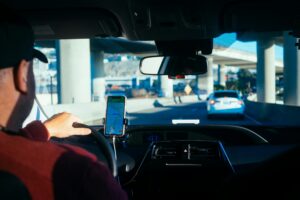
 A recent police response in Beverly Hills involving an Uber driver and a reported hostage standoff has renewed public concern about rideshare safety and how driver screening is handled before individuals are allowed to transport passengers. While details of the specific incident continue to be reported by local outlets, the broader issue being raised is not new. It centers on whether current background check standards are strong enough to protect riders in high volume urban markets like Los Angeles.
Uber, like other major rideshare platforms, relies on digital screening systems that typically review driving records and certain criminal history databases before approving drivers. However, critics have long argued that these checks are not always comprehensive enough to catch more serious or emerging risk factors. That concern becomes more urgent in situations where a driver is later involved in a violent or high risk incident involving passengers.
The Beverly Hills incident is being discussed in that context because it highlights a gap between consumer expectation and platform responsibility. Most riders assume that a driver has undergone a thorough vetting process that prioritizes safety above all else. When an incident like this occurs, it raises questions about what information is being reviewed, how often background checks are updated, and whether more robust screening measures should be required at the state level.
At the same time, the conversation around rideshare safety is increasingly overlapping with a separate legal and political debate in California. A proposed initiative that would cap attorney contingency fees at 25 percent in personal injury cases is being framed by critics as a consumer protection measure aimed at reducing litigation costs. However, opponents argue that it could significantly limit access to legal representation for accident and injury victims.
The concern is that if attorney compensation is restricted, fewer lawyers may be willing to take on complex injury cases that require extensive investigation, expert analysis, and long term litigation. In practice, this could make it harder for individuals injured in rideshare related incidents or other transportation accidents to pursue claims against large corporations.
This debate also intersects with broader concerns about accountability in the rideshare industry. When companies operate at a massive scale, questions about liability, safety standards, and corporate responsibility become more complicated. Critics of the proposed cap argue that limiting attorney fees does not address the underlying issue of safety or prevention, but instead shifts the financial balance further in favor of large platforms.
Supporters of the initiative frame it differently, arguing that it is intended to reduce excessive legal costs and streamline the claims process. However, opponents counter that injury litigation is already highly structured and that attorney fees are tied directly to case risk, duration, and complexity rather than being arbitrary.
Recent reporting and legal outcomes in rideshare related cases have also added context to this discussion. In some instances, juries have found companies liable for harm involving drivers, including cases involving serious misconduct and failure to prevent foreseeable risk. These cases are often complex and depend heavily on legal advocacy to fully develop the facts and present them in court.
Public safety advocates point out that rideshare platforms occupy a unique space in transportation law. Drivers are not traditional employees, yet they provide services that directly impact passenger safety. This hybrid structure creates ongoing legal questions about how much responsibility the company has versus the individual driver.
In that environment, both the Beverly Hills incident and the proposed fee cap are being viewed as part of a larger conversation about accountability, regulation, and access to justice. While they are separate issues, they intersect around one central theme, which is how responsibility is defined and enforced when something goes wrong.
For individuals injured in rideshare related incidents, these questions are not abstract. They directly affect whether claims can be filed, how long cases take, and what resources are available to pursue compensation for medical bills, lost wages, and long term recovery needs.
Kamelia Jalilvand represents individuals who have been injured in rideshare and vehicle related incidents throughout Los Angeles. She understands how complex these cases can become when corporate policies, insurance systems, and evolving legislation all overlap. Her approach focuses on carefully evaluating each case to understand what happened, who may be responsible, and what legal options are available moving forward.
As discussions around background checks and legal fee caps continue, incidents like the one in Beverly Hills highlight why safety oversight and access to legal representation remain closely connected issues. Both shape how accountability is defined when transportation systems fail to protect the people who rely on them.